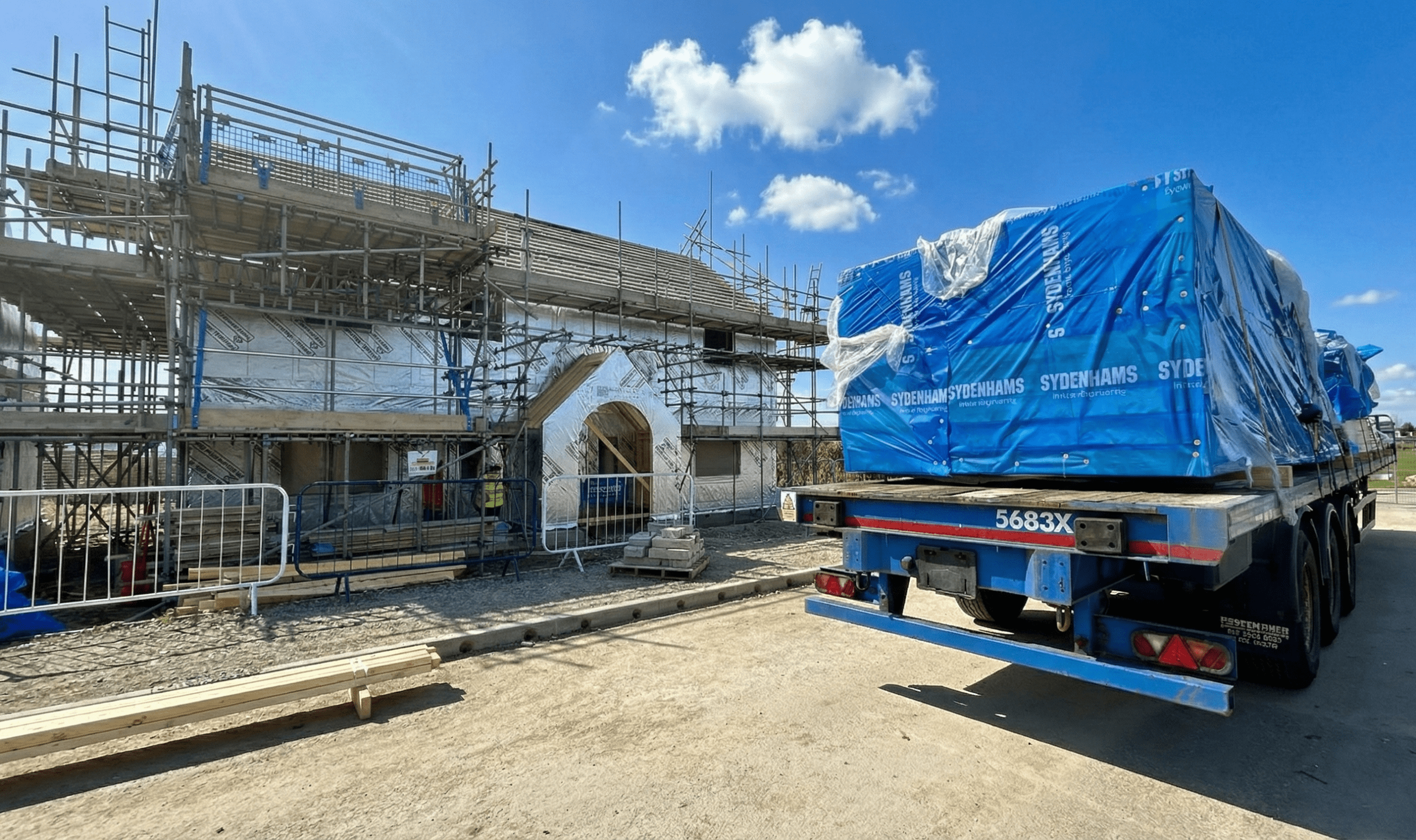
Work is underway at Newquay on a new supported housing scheme that will provide 24 high quality homes with wraparound support for local people experiencing homelessness. The first phase includes temporary accommodation for 16 individuals, comprising two four-bedroom houses and eight one-bedroom apartments.
The project forms part of a broader ambition to combine social value with long-term environmental responsibility. Alongside specialist support provision, the homes are being delivered to demanding low carbon standards to minimise both embodied emissions and long-term running costs.

Designed for Low Embodied and Operational Carbon
From the outset, the development has focused on reducing environmental impact at every stage of construction.
Ultra low carbon cement has been specified for the foundations, significantly lowering emissions compared to traditional concrete mixes. Above ground, the superstructure is formed using a precision manufactured timber frame system designed to Passive House principles.
Sydenhams Timber Engineering is providing pre-fabricated twin-wall panels in partnership with GRWN Group. These panels are insulated with UK-grown industrial hemp, creating a highly insulated building envelope while sequestering carbon within the fabric of the homes.

The use of bio-based materials and off-site manufacturing contributes to:
- Reduced upfront embodied carbon
- Lower construction waste
- Faster, more controlled installation on site
- Long-term carbon storage within the structure
High Performance Fabric, Reduced Energy Demand
The twin-wall timber panels create a super-insulated shell that requires very little heating or cooling. By prioritising fabric performance, the homes reduce energy demand before renewable systems are introduced.
The development is all-electric and includes roof-mounted solar panels, ensuring operational emissions remain low and shielding future residents and operators from exposure to fossil fuel price volatility.
This approach not only supports environmental objectives but also reduces long-term running costs, an important factor in supported housing provision.

Collaboration Across Sectors
The scheme is being delivered through collaboration between landowner, charity, design and construction partners, with wraparound care provided by St Petrocs, a long-established Cornish charity supporting people experiencing homelessness.
By integrating low carbon construction methods with person-centred accommodation, the project demonstrates how environmental performance and social purpose can align. The intention is not simply to provide temporary shelter, but to create dignified, high quality homes that support long-term stability and wellbeing.
Sydenhams Timber Engineering’s Role
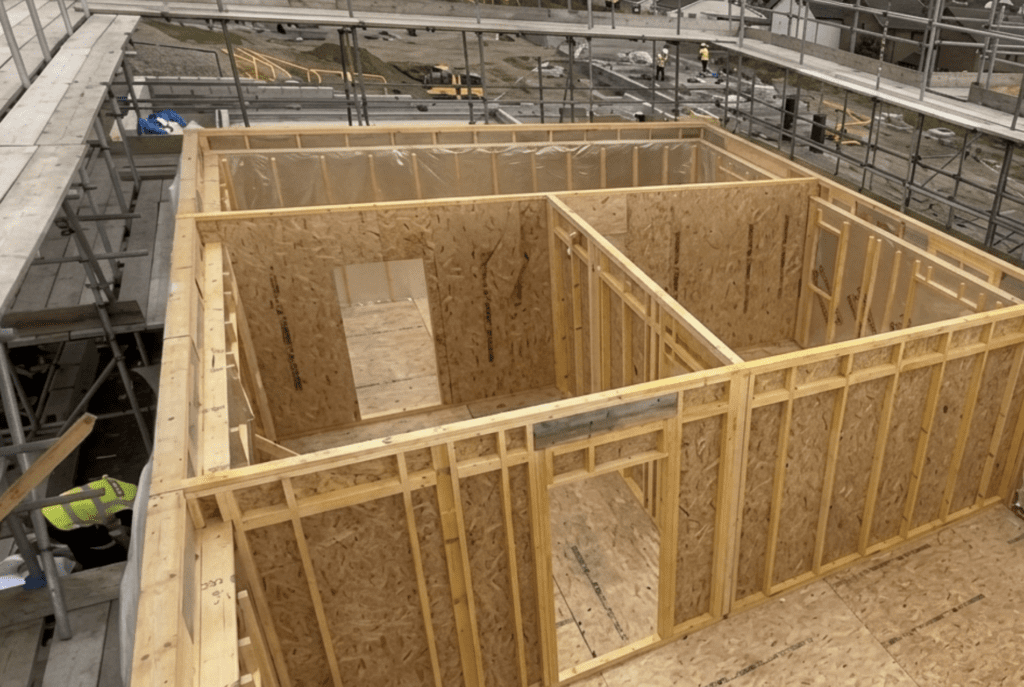
Sydenhams Timber Engineering is providing the timber frame superstructure for the development, including the manufacture and supply of pre-insulated twin-wall panels.
The system delivers:
- Precision manufactured structural timber frames
- Pre-installed hemp insulation from UK-grown crops
- Enhanced thermal performance aligned with Passive House principles
- Reduced embodied carbon compared to masonry alternatives
By combining bio-based materials with advanced off-site manufacturing, the project at Newquay sets a benchmark for how supported housing can be delivered with both environmental and social responsibility at its core.

